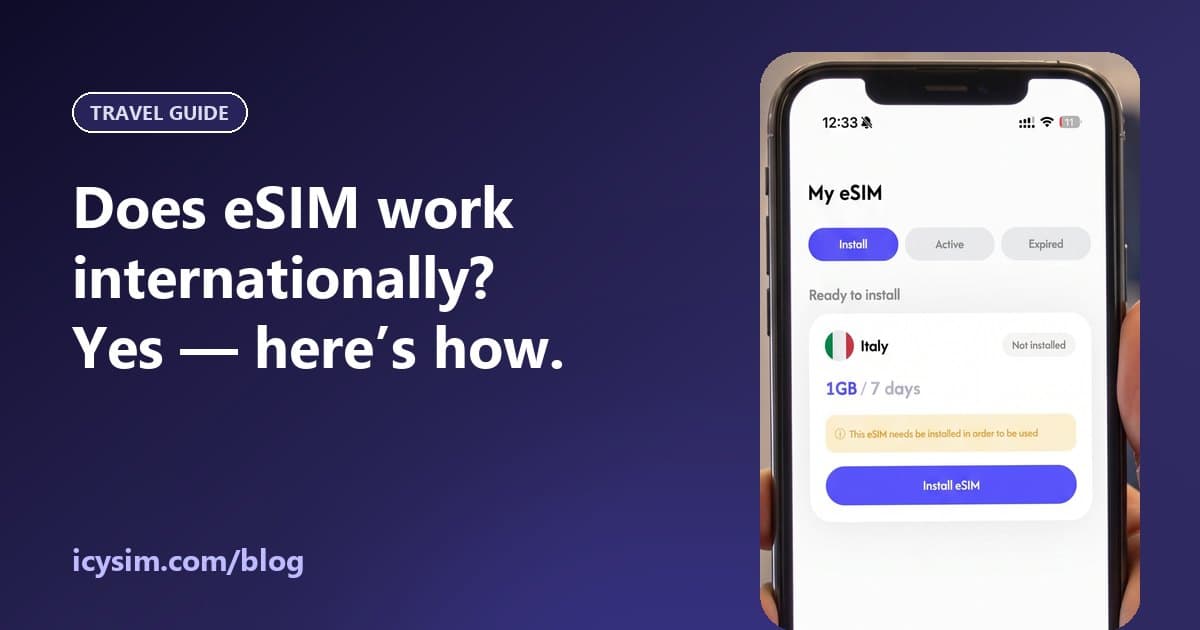

For travel, an eSIM is usually the better choice: you set it up before you leave, keep your home SIM in for calls and texts, and you’re online the moment you land. A physical SIM card still wins in two cases — your phone doesn’t support eSIM, or you move your number between phones very often.
- A SIM card and an eSIM do the same job on the same networks — the difference is physical vs downloaded.
- eSIM wins for travel: no shop, no swapping, home number stays active.
- Physical SIM wins if your phone lacks eSIM or you swap phones constantly.
- Signal and speed are the same; security is slightly better with eSIM (nothing to pull out).
- Best of both: keep your SIM for your number, add a travel eSIM for data.
What’s the difference between an eSIM and a SIM card?
A SIM card is the small plastic chip you slot into your phone; it holds the details that identify you to a mobile network. An eSIM does exactly the same job, but the chip is built into the phone and the plan is downloaded instead of inserted — usually by scanning a QR code or tapping install in an app. Same networks, same 4G/5G, same speeds. The differences are in how you get it, how many you can hold, and what happens when you travel or change phones.
eSIM vs physical SIM at a glance
| Physical SIM card | eSIM | |
|---|---|---|
| How you get it | In a store or by post | Download by QR code or in an app |
| Setup time | Minutes to days | A couple of minutes |
| Plans on one phone | One per SIM slot | Several stored, two active at once |
| Travel | Buy a local card and swap it in | Add a travel plan before you fly |
| Swap to a new phone | Move the card across | Transfer, or re-issue from the provider |
| Lost or stolen phone | Card can be removed and reused | Nothing to pull out |
| Phone support | Almost every phone | Most phones from ~2018 onwards |
Getting a plan: store vs two minutes on your phone
With a physical SIM you need the card in hand — from a store, by post, or from a kiosk at the airport. With an eSIM you buy the plan online and install it straight away. Here’s what that looks like in the ICY SIM app:
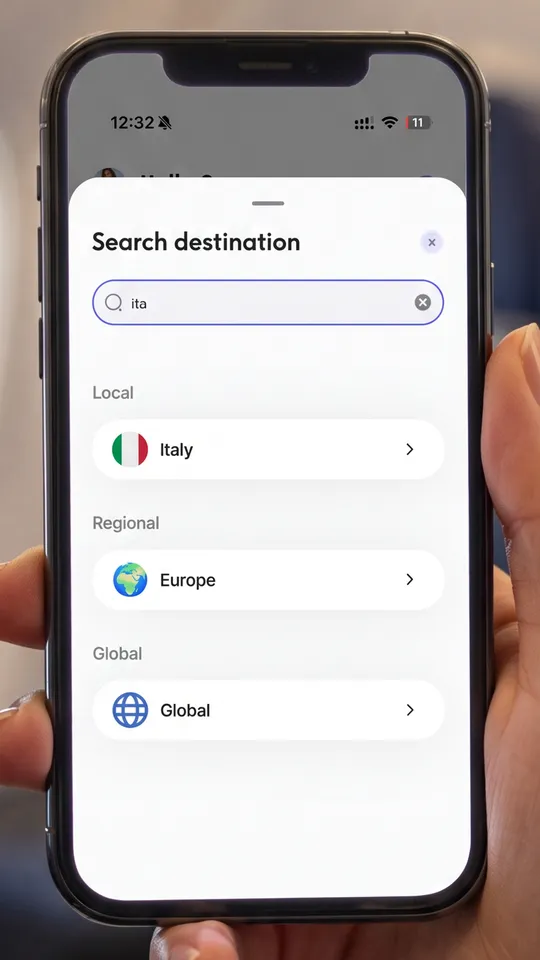
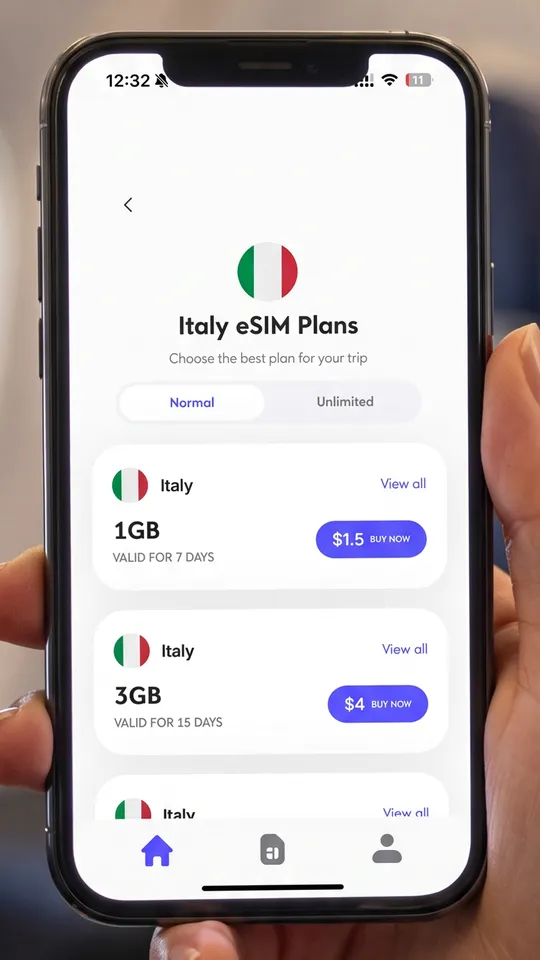
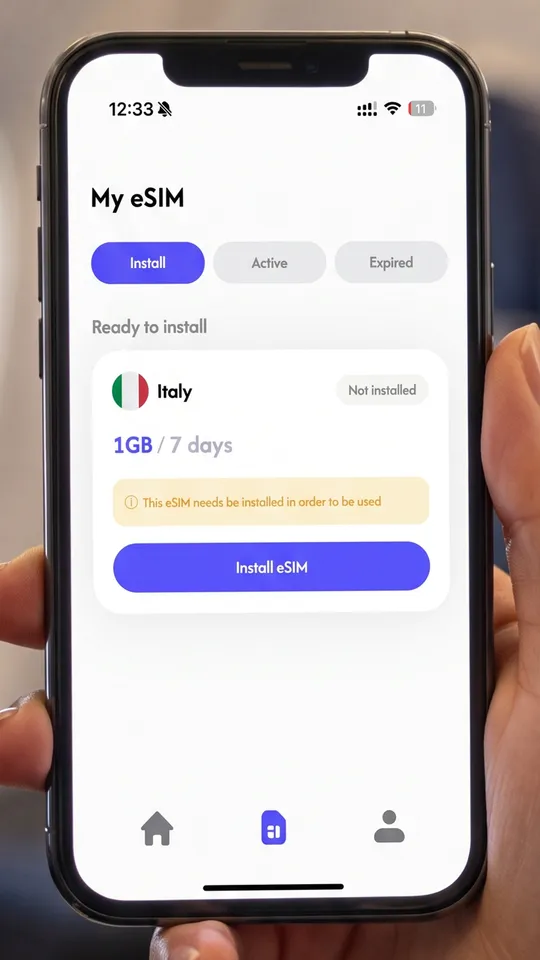
Is eSIM cheaper than a SIM card?
The format doesn’t decide the price — the plan does. What changes for travellers is the comparison you’re really making: a prepaid travel eSIM is typically far cheaper than your home carrier’s roaming, and in the same ballpark as a local SIM bought at your destination, without the airport queue. You can see exact prices per country on our destinations page.
Is eSIM safer than a SIM card?
In one practical way, yes: a thief can’t pop an eSIM out and put it in another phone to receive your texts. Both types can still be targeted by “SIM-swap” scams, where someone tricks your carrier into moving your number — so set a PIN or passcode on your mobile account either way.
What happens when you change phones?
This is the physical SIM’s strongest point: take the card out, put it in the new phone, done. With eSIM, most modern phones offer a transfer during setup (iPhone’s Quick Start, and Android’s “transfer SIM” on recent phones), or your provider re-issues it. For a travel eSIM this rarely matters — you use it on one phone for one trip.
Signal, speed and battery
- Signal and speed depend on the network and your phone’s antenna — not on whether the SIM is physical or embedded.
- Battery: running two lines at once can use a little more power, but that’s true of two physical SIMs as well.
- Reliability: an eSIM can’t get loose, dirty or damaged in the tray.
eSIM vs a local SIM card abroad
| Local SIM card | Travel eSIM | |
|---|---|---|
| When you can buy it | After you land, at a shop | Before you leave |
| Paperwork | Passport registration in many countries | None at the shop |
| Your home SIM | Taken out — calls and bank texts missed | Stays in and active |
| Best for | Long stays needing a local number | Most trips |
eSIM vs pocket Wi-Fi
Pocket Wi-Fi is a separate router you rent, charge and carry. It suits a group sharing one connection, but it has to be picked up and returned, and if the person carrying it walks off, everyone loses internet. An eSIM lives in your phone — and you can still share data with a laptop or a friend through your phone’s hotspot.
Digital SIM, virtual SIM, USIM — what do they mean?
- Digital SIM — another name for eSIM. Same thing.
- Virtual SIM — usually an app that gives you a second phone number over the internet. It isn’t a SIM and doesn’t give you mobile data.
- USIM — the software on a SIM that lets it connect to 3G/4G/5G networks. Physical SIMs and eSIMs both run it, so “USIM vs eSIM” isn’t really a choice.
- iSIM — a newer design where the SIM is built into the phone’s main chip. It works like an eSIM from your point of view.
- Normal SIM — just a physical SIM card.
How to check if your phone supports eSIM
- Quickest check (most phones): open the phone dialler and enter *#06#. If you see an EID number, the phone has an eSIM.
- iPhone: Settings → General → About. An EID entry means eSIM support. iPhone XS, XR and later support eSIM (models sold in mainland China, Hong Kong and Macau may not).
- Android: Settings → Network & internet (or Connections) → SIMs / SIM manager. An option to add or download an eSIM means you’re supported.
- Still unsure? Search your exact model in our compatible devices list.
Can you use a SIM card and an eSIM at the same time?
Yes — on most eSIM phones this is the normal setup, called dual SIM. Both lines stay active: you choose which one handles mobile data and which is the default for calls and texts. For travel that means your SIM card keeps your number (calls, SMS, bank codes) while the eSIM supplies local data. You can switch the data line in Settings any time — see how eSIM works abroad for the exact taps.
Can you switch your SIM card to an eSIM?
Usually, yes. Many carriers let you convert your existing number from a physical SIM to an eSIM — on iPhone, some carriers offer a Convert to eSIM option under Settings → Cellular; others do it through their app or a store visit. It’s entirely optional, though: for travel you can leave your home SIM exactly as it is and simply add a travel eSIM next to it.
What we see on real ICY SIM orders
Our customers have used ICY SIM in the United States, Indonesia, the United Kingdom, Germany, France, Spain, Italy, Morocco, Oman, the UAE, China, Thailand and Latvia, plus our Europe, Asia and Global plans.
The feedback on coverage and speed has been consistently good. The setup we recommend to all of them is the same: keep the physical SIM in the phone for your normal number, and use the eSIM purely for data while you travel.
Which should you choose?
- Choose eSIM if your phone supports it and you want data the moment you land without giving up your number.
- Choose a physical SIM if your phone has no eSIM, or you move your number between phones every few weeks.
- Choose a local SIM for a long stay where you need a local phone number.
- Choose pocket Wi-Fi only if a group wants to share one connection and is happy to carry a device.
You don’t have to switch your home line to eSIM at all. The easy win is to keep your current SIM and add a travel eSIM for trips. Check whether your phone supports eSIM first, then read how eSIM works abroad.
Try eSIM on your next trip
Keep your SIM for calls, add an ICY SIM eSIM for data. Plans for 190+ destinations.
Find your destination →